

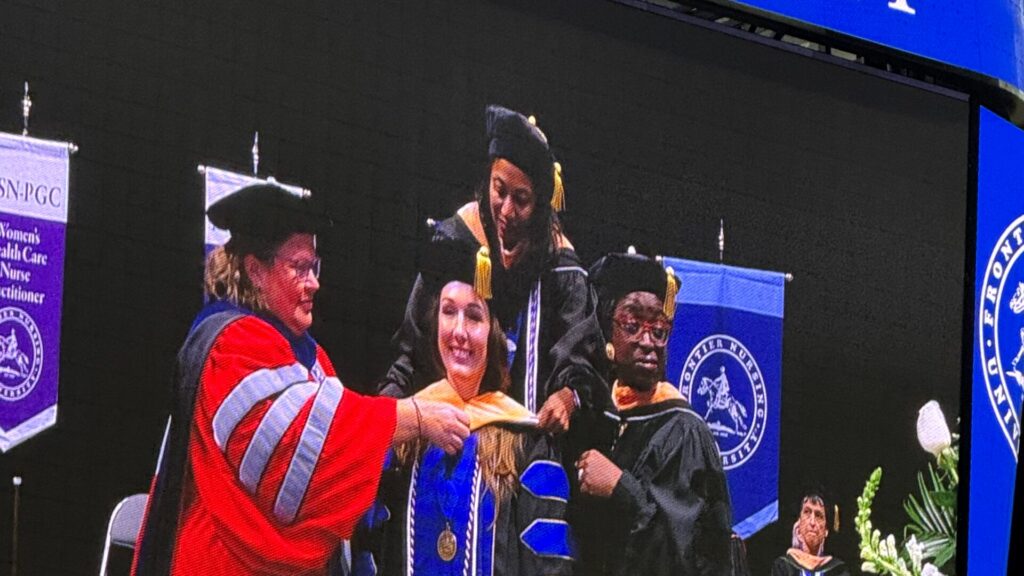
A lot of new patients ask me some version of this: “Are you a doctor?” It’s a fair question, and you deserve a straight answer before you choose who manages your health.
Short answer: I’m a nurse practitioner, not a physician. I hold a Doctor of Nursing Practice (DNP), which is why you’ll sometimes hear “Dr. Cervantes,” but my license is as an advanced practice registered nurse. Here’s what that means for your care.
How the training differs
| Nurse practitioner (NP) | Physician (MD or DO) | |
|---|---|---|
| Starting point | Registered nurse (RN), usually with years of bedside experience | College degree, then medical school |
| Graduate training | Master’s (MSN) or doctorate (DNP) in a focus area such as family practice | 4 years of medical school |
| After school | National board certification in the focus area | Residency of 3 or more years, then board certification |
| Model of training | Nursing model: the whole person, prevention, education | Medical model: diagnosis and treatment of disease, with deep training across specialties |
Physicians complete far more supervised clinical hours than NPs. That depth matters most for complicated, uncommon or multi-system problems. For everyday primary care, studies comparing NPs and physicians have generally found similar quality of care and patient satisfaction.
What a family nurse practitioner can do in Texas
- Diagnose and treat common illnesses and injuries
- Order and interpret labs and imaging
- Prescribe medications
- Manage chronic conditions such as diabetes and high blood pressure
- Provide annual exams and preventive screenings
- Refer you to specialists when you need one
In Texas, nurse practitioners prescribe under a prescriptive authority agreement with a physician. I have one with a collaborating physician, which means there is a physician I can consult when a case calls for it.
When you need a physician or specialist
Primary care is the front door, not the whole house. If you have a complex condition, need surgery, or aren’t improving the way we expect, I’ll refer you to the right specialist and stay involved in your care. Knowing when to refer is part of good primary care, whether your provider is an NP or a physician.
What matters most when choosing a provider
The letters after a name matter less than a few practical questions:
- Can you get an appointment when you’re sick?
- Does your provider listen and explain things clearly?
- Do you see the same person over time, so your history isn’t starting over every visit?
- Will they tell you when something is outside their scope?
If you’re looking for a primary care provider in Rowlett, I’m happy to meet you and answer any questions about my training. Call (972) 348-0046 or book online.
— Laura Cervantes, DNP, APRN, FNP-C